
The CFO you bring in before you can hire one.
I embed in venture-stage companies. I build the model, the cap table, and the data room, then run the raise alongside you.
Former CFO, Pittsburgh Knights. Backed by the Pittsburgh Steelers, Bob Nutting, and Wiz Khalifa.
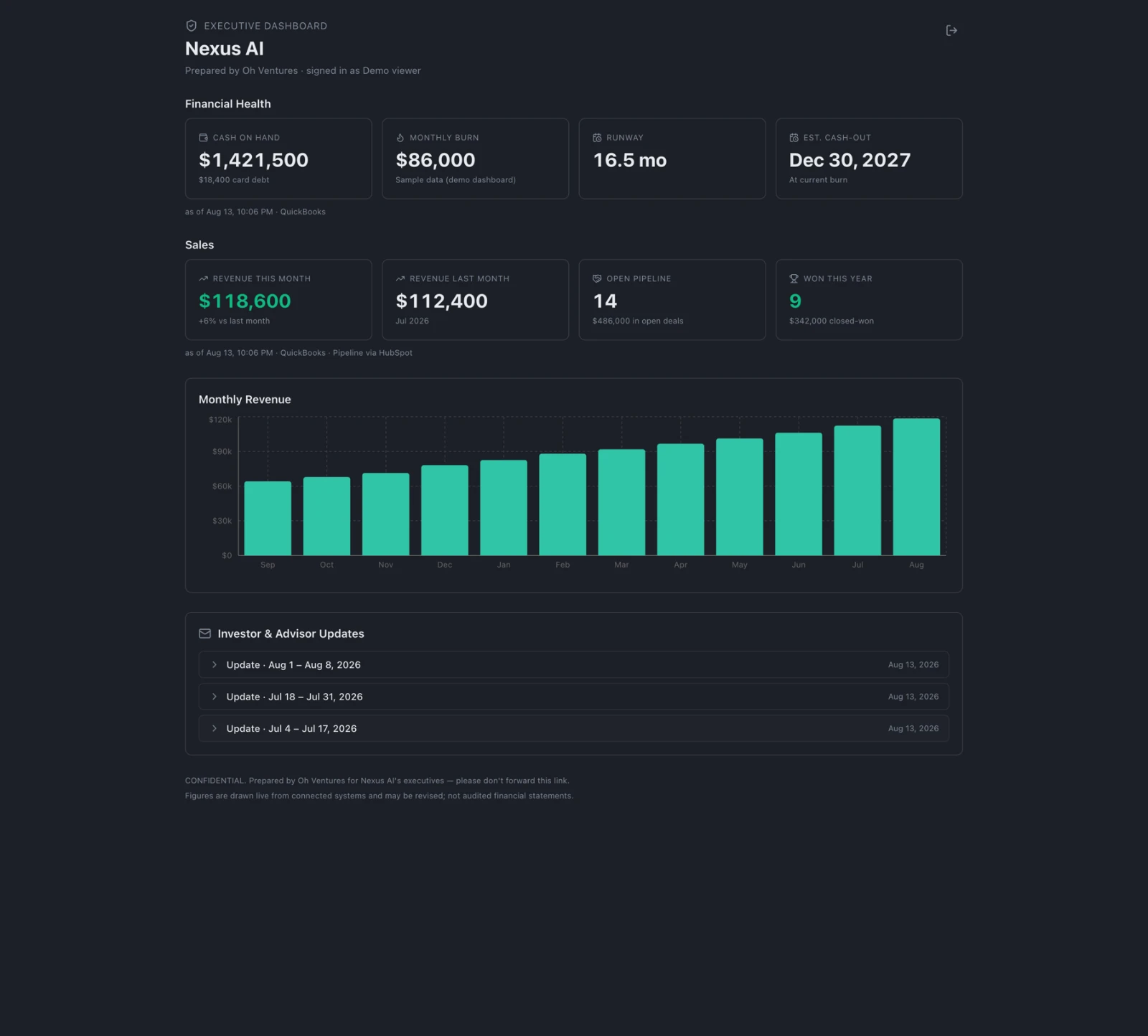
The record


Not a slide about finance. The finance function.
The rest of the seat.
Ten things I own once I'm inFinancial model
Three statements, monthly, with scenarios.
Cap table
Every SAFE and note, through the next round.
Data room
Indexed the way investors run diligence.
Investor materials
Deck and one-pager, built from the model.
Raise strategy
Round structure, target list, the meetings.
Board reporting
Monthly numbers in the format boards ask for.
Books and close
Chart of accounts and the monthly close.
Hiring plan
Who to hire, in what order, on what terms.
Corporate records
Consents and ledgers, drafted for your counsel.
Weekly cadence
One agenda, the numbers, the decisions.
Two quarters. One to build, one to run.
Two people land on this page.
You want to know what you actually get.
- A model you can defend in a partner meeting.
- A cap table that matches the signed documents.
- A data room that is ready before the first request.
- Someone in the raise with you, not commenting from the side.
You are checking who runs the numbers.
- The model ties to the books and the bank.
- The cap table ties to the ledger, every SAFE, and every note.
- Diligence requests get answered from one data room.
- I take the finance questions on the call myself.
Six companies, today.
MolQ Entertainment
Bond4 Waste
Sides
Chalked Fantasy
AquaEdits
Wildcard Gaming
Your company

“We had a product and no infrastructure. Jonathan came in and built the financial model, cap table, data room, and pitch deck. The first investor meeting we walked into, we were ready.”

“Most fractional CFOs hand you a spreadsheet. Jonathan installed an operating system. The difference shows up in every board conversation.”
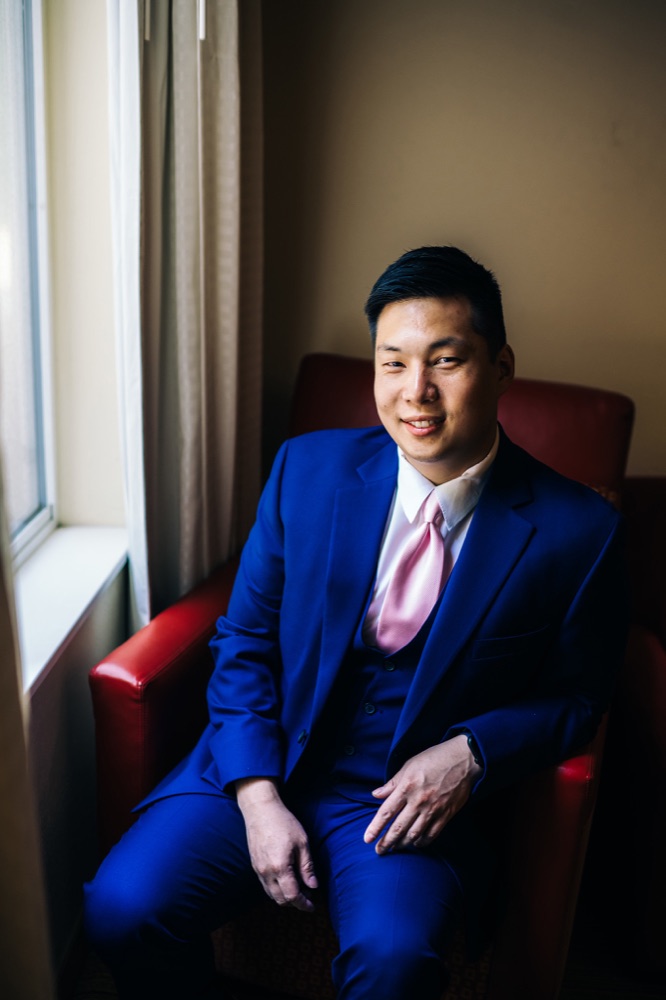
Jonathan Oh
I was CFO of the Pittsburgh Knights for six years, from inception through three rounds of capital. I built the financial architecture and the operating systems, and scaled the team past 70.
Since then I have worked as an embedded CFO across gaming, AI, SaaS, and entertainment. I am one operator, not a firm. When you hire me, you get me.
Shipped activations with Riot Games · Sheetz · McDonald's · eBay · HyperX
The engagement, as a term sheet.
- Structure
- Embedded retainer, or a defined project.A project is one outcome: a model build, a data room, a capital narrative, or an operating reset.
- Term
- Six months minimum on retainer. Most continue open-ended.
- Compensation
- Cash, equity, or a deferred mix when a raise is close.
- Seat
- Fractional CFO or COO. I own the model, the cap table, reporting, and the raise.
- Handoff
- When you hire a full-time CFO, I hand over the system and train them.
- Out of scope
- Audit, tax filing, legal advice, and broker-dealer activity.I set up the books and run the close until you need a bookkeeper.
What founders ask first.
What does a fractional CFO do for a startup?
I run your finance function part-time. That means the financial model, the cap table, board reporting, the data room, and the raise. A bookkeeper records what already happened. I work on what happens next. Capital strategy vs. bookkeeping →
When should a startup hire a fractional CFO?
Six to twelve months before a raise is the usual answer. The other trigger is an investor asking for numbers you can't produce quickly. When to hire a fractional CFO →
How much does a fractional CFO cost?
My minimum retainer runs about 20 to 25% of what a full-time CFO costs. I take cash, equity, or a deferred mix when a raise is close.
How long until we're investor-ready?
Usually 30 to 60 days from kickoff to a model and a data room an investor can open.
What stages and sectors do you work with?
Pre-seed through Series A. Right now that's media, software, gaming, esports, and AI companies in the US and Canada.
Where are you based?
Pittsburgh, with regular time in New York. The work is remote-first, and my current companies are in New York, Florida, Houston, Los Angeles, Madison, and Toronto.
What I have been thinking about.
The blind spot every full-time team has: its own documents.
Read July 12, 2026The discovery call that tells you whether you even need to raise.
Read October 15, 2025Building Knights Arena from an apartment.
ReadCapital and operating notes, every Friday
A short weekly read on who is raising, which funds and programs are opening up, and what it means for venture-stage operators. No spam, unsubscribe anytime. How I handle your email.
Install structure before it becomes urgent.
If you are six to twelve months from a raise, or in the middle of one, a short call will tell us both whether there is fit.
Book a call- Pittsburgh Knights, where I was CFO from inception through three rounds of capital.
- Engagements active as of October 2026.
- My minimum retainer, annualized, against a seed or Series A CFO at $170K to $240K base plus about 30% for benefits, before equity and recruiting fees. Market ranges, 2026.